When NOT to Castle in Chess: 6 Situations Where It’s a Blunder
November 18, 2026 2026-11-16 8:21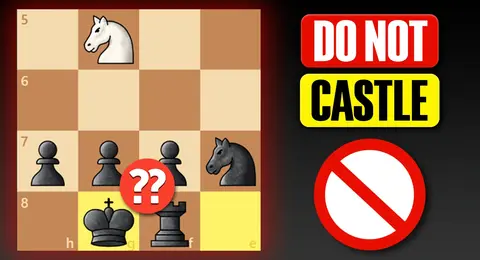
When NOT to Castle in Chess: 6 Situations Where It’s a Blunder
When NOT to Castle in Chess: 6 Situations Where It’s a Blunder
One of the first chess principles every beginner learns is to castle early and bring the king to safety.
And in most situations, that’s excellent advice.
Castling usually helps protect your king while connecting your rooks and completing an important part of your opening development.
But there’s something many chess players overlook:
Castling isn’t always the safest move. In certain positions, it can actually be a serious blunder.
Sometimes, castling places your king directly into an opponent’s attack. Other times, it wastes a valuable move or leaves your king less active when it needs to participate in the game.
In this lesson, I’ll explain 6 situations where castling can be a mistake and how to recognize when you should keep your king where it is.
Why Castling Can Be Dangerous in Chess
Many amateur players treat castling as an automatic decision.
They develop their knights and bishops, clear the path for their king, and castle as soon as possible.
But strong players don’t castle simply because they can.
They first evaluate the position and consider whether castling actually improves their king’s safety.
For example, if your opponent already has several pieces aimed at your kingside, castling in that direction might place your king exactly where the opponent wants it.
Instead of escaping danger, you could be moving directly into it.
One of the most important situations to recognize is when your opponent has already concentrated their pieces on one side of the board.
1. When Your Opponent Is Already Attacking That Side
If you castle directly into that attack, you may give your opponent a clear target.
Before castling, examine where your opponent’s pieces are pointing and whether they can quickly open lines toward your king.
2. When Your King Lacks Enough Defenders
A castled king isn’t automatically safe.
If important defensive pieces are missing or poorly positioned, your opponent may have opportunities to launch an attack.
Pay attention to the pieces protecting your king and whether your opponent has enough attacking forces to create serious threats.
3. When Castling Wastes a Critical Tempo
Sometimes, the position demands immediate action.
If you have a strong attacking opportunity, spending a move on castling might allow your opponent to defend or escape.
In such situations, attacking first can be more important than following the usual opening principle.
The key is recognizing when the position requires urgent action.
4. When Castling Reduces Your King’s Activity in the Endgame
King safety becomes less important than king activity in many endgames.
Unlike the opening and middlegame, where the king usually needs protection, the endgame often requires your king to become an active fighting piece.
Castling unnecessarily can leave your king farther away from the center and important pawns.
How to Decide Whether You Should Castle
Rather than automatically castling at the first opportunity, ask yourself a few practical questions:
- Is my king actually safer on the castled side?
- Does my opponent already have attacking pieces aimed there?
- Do I have enough defenders around my king?
- Is there a more urgent move I should play first?
- Would keeping my king active be more useful in this position?
These questions can help you avoid one of the most common chess mistakes: following a general rule without considering the specific position.
The Most Important Castling Rule
The goal isn’t to avoid castling altogether.
Castling remains one of the most useful moves in chess, especially during the opening.
But you should castle because it improves your position, not simply because you’ve been taught to castle early.
In my video lesson, I’ll walk you through 6 practical situations where castling can backfire and explain how to recognize the warning signs before making your move.
Understanding these ideas will help you improve your king safety, avoid unnecessary blunders, and make better decisions throughout your chess games.
Below, you can find the examples and games shown in the video:

Pair these tips with pattern recognition. Browse the Chess Tactics Lesson Guide. Access lessons on tactical motifs, patterns and combinations across all phases of the game.
If you like to get a structured program that can help bring you to the level of 2000 Elo and beyond, we have assembled courses into a bundle that will help you achieve this goal. Check out our Boost Your ELO to 2000 Bundle.

Individually, the courses included here are valued at $486. But if you purchase them as a course bundle, then you can get them for only $197. That’s nearly a 60% discount!!